The Crescent Foundation
Where excellence embodies the field of science.
Crescent Bioresearch supplies laboratory compounds and reagents for in-vitro research. Every lot is tested by an independent laboratory before it is listed, and the full certificate is published, including the one number most of the sector replaces with a word.
Foundation
The framework

01
Critical assessment
Nothing about a lot is taken on the manufacturer's word. Identity, purity and bacterial endotoxin are each measured against a written specification by a laboratory with no stake in the answer: identity by FTIR (USP <197A>), purity and content by HPLC (USP <621>), endotoxin by gel-clot LAL (USP <85>).
02
Truth
The certificate says what was found, not what was hoped. Where the finding is a number, the number is printed. Where an assay cannot resolve below a bound, the bound is printed. Nothing is rounded into a word.
03
Transparency
Every report becomes public data once received, in full, under its lot number, with the names of the scientists who signed it. The certificate exists before the listing does, and superseded certificates stay in the library.
Who we are

Crescent Bioresearch supplies laboratory compounds and reagents intended strictly for in-vitro laboratory and experimental use. It was founded to set a different standard, and that standard is a record anyone can open: each compound sent out for testing is assigned a unique lot, the testing is done by a separate entity, and every report becomes public data once received.
- SuppliesLaboratory compounds and reagents for laboratory use
- TestingIndependent third-party laboratory, every lot, before listing
- MethodsHPLC (USP <621>), FTIR (USP <197A>), gel-clot LAL (USP <85>)
- RecordsFull certificates in a public library, updated with each new lot
- DocumentationA safety data sheet for every compound in the catalog
Catalog
What we supply
GHK-Cu
100 mg
CBR-GHK-260403-001
- HPLC
- 99.7%
- Endotoxin
- 29.3 EU/vial
BPC-157
10 mg
CBR-BPC-260403-001
- HPLC
- 99.7%
- Endotoxin
- < 5 EU/vial
DSIP
15 mg
CBR-DSP-260403-001
- HPLC
- 99.6%
- Endotoxin
- < 5 EU/vial
Thymalin
10 mg
CBR-THY-260403
- HPLC
- 99.6%
- Endotoxin
- < 5 EU/vial
NAD+
1,000 mg
CBR-NAD-260411-001
- HPLC
- 99.8%
- Endotoxin
- ≤ 0.05 EU/mL
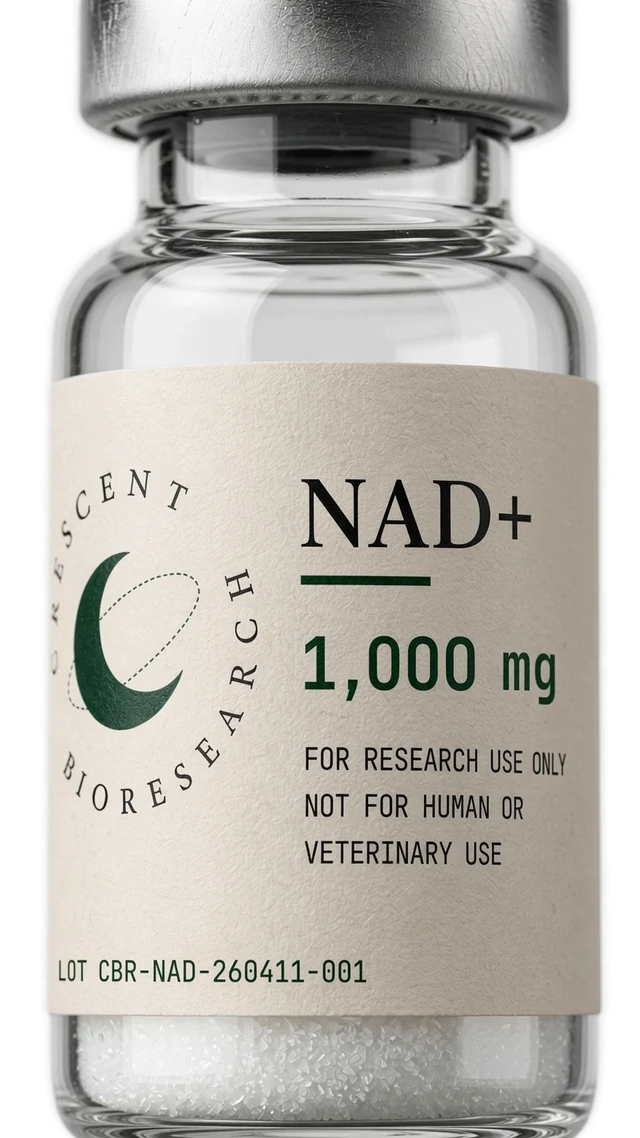
Nicotinamide adenine dinucleotide. C21H27N7O14P2, 663.4 g/mol. A dinucleotide of nicotinamide and adenine joined through two phosphate groups, supplied as a buffered lyophilised powder.
MOTS-c
40 mg
CBR-MOT-260403-001
- HPLC
- 99.8%
- Endotoxin
- 36.6 EU/vial
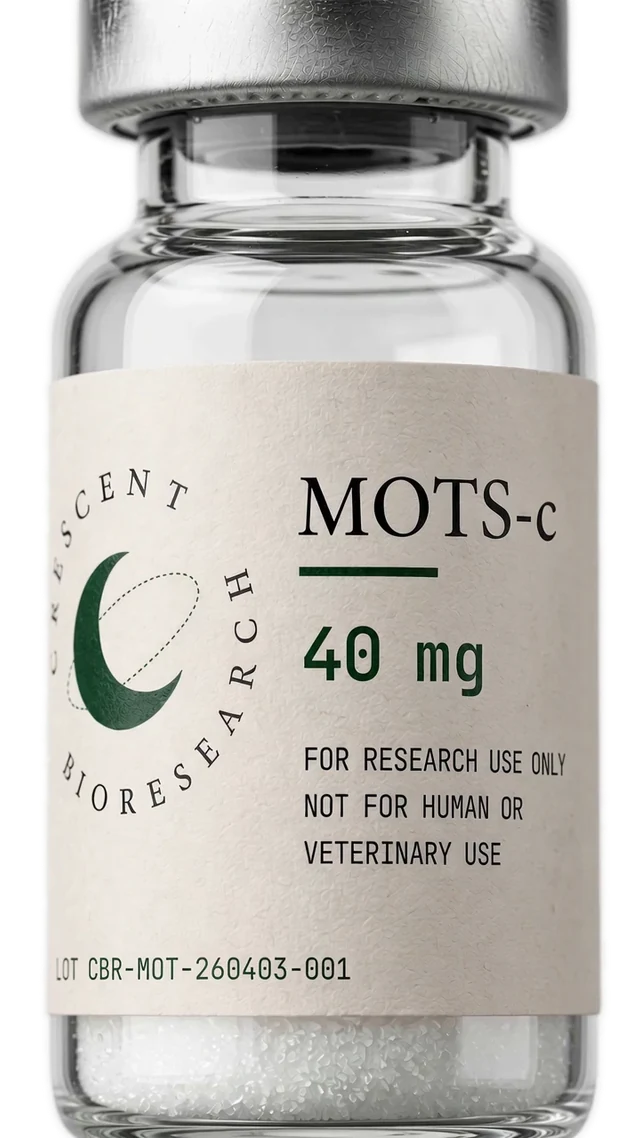
A 16-residue peptide encoded in the mitochondrial 12S rRNA gene. Sequence MRWQEMGYIFYPRKLR, 2,174.6 g/mol, supplied lyophilised.
Selank
10 mg
CBR-SKL-260403-001
- HPLC
- 99.7%
- Endotoxin
- 13.7 EU/vial
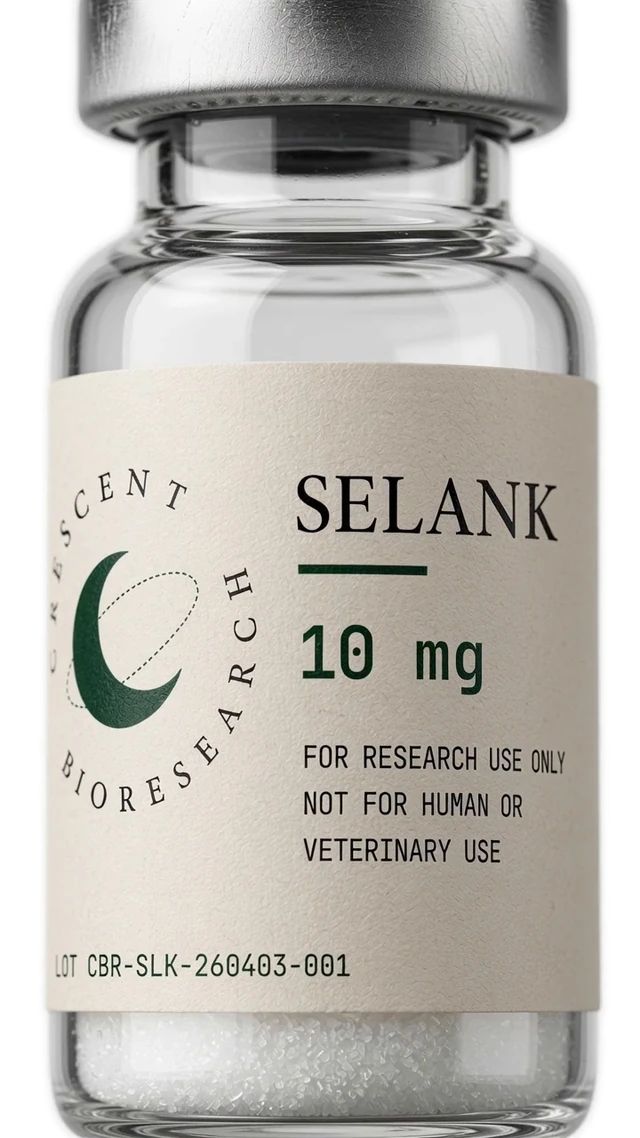
A synthetic heptapeptide, Thr-Lys-Pro-Arg-Pro-Gly-Pro, an analogue of tuftsin with a Pro-Gly-Pro tail. C33H57N11O9, 751.9 g/mol, supplied lyophilised.
Semax, Epithalon 10 mg and 50 mg, Kisspeptin-10, Ipamorelin and KLOW. Values change with each new lot.
Testing
Three measurements, one certificate
What is it?
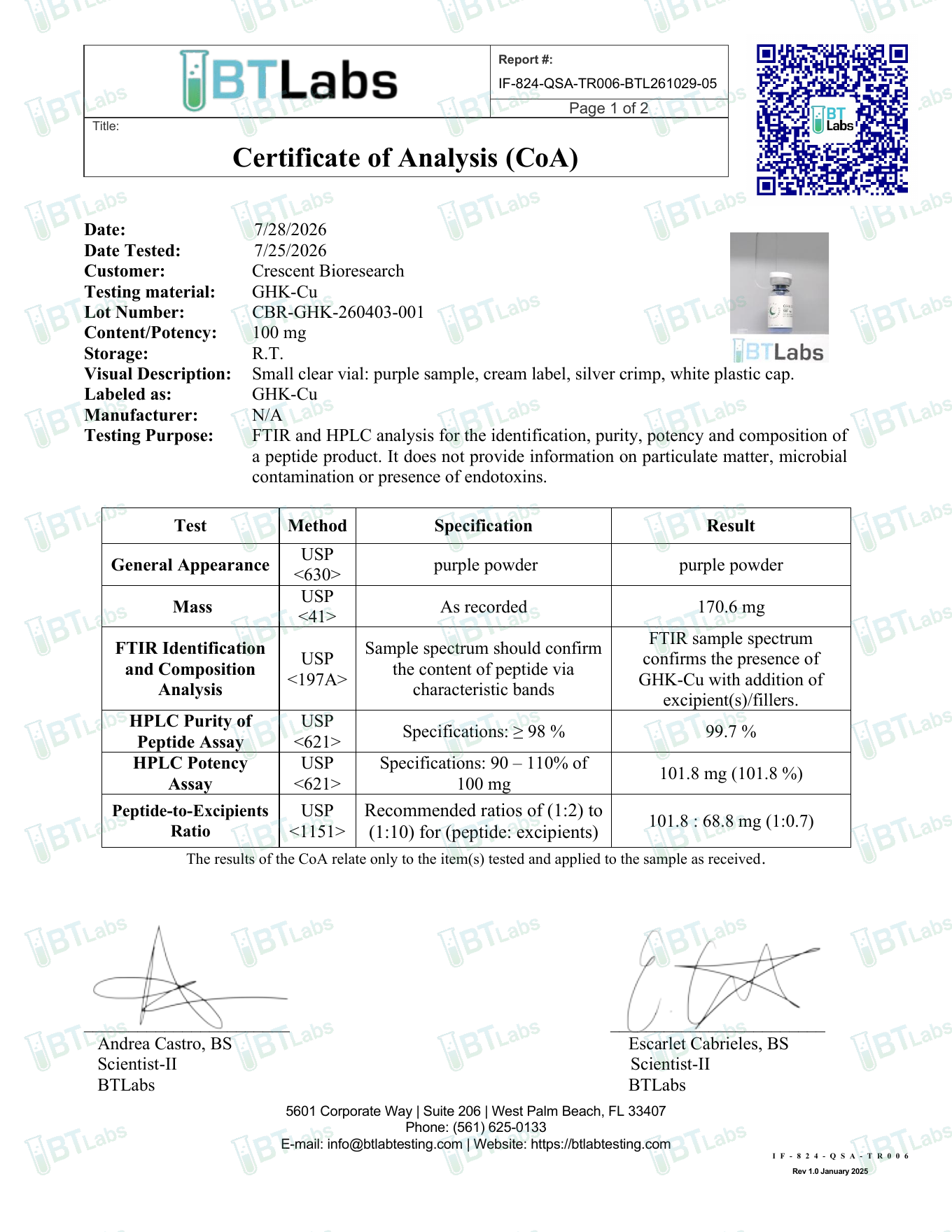
Identity is confirmed by Fourier-transform infrared spectroscopy against the compound's characteristic bands, following USP <197A>. On this certificate the laboratory records that the sample spectrum confirms the presence of GHK-Cu.
What else is in it?
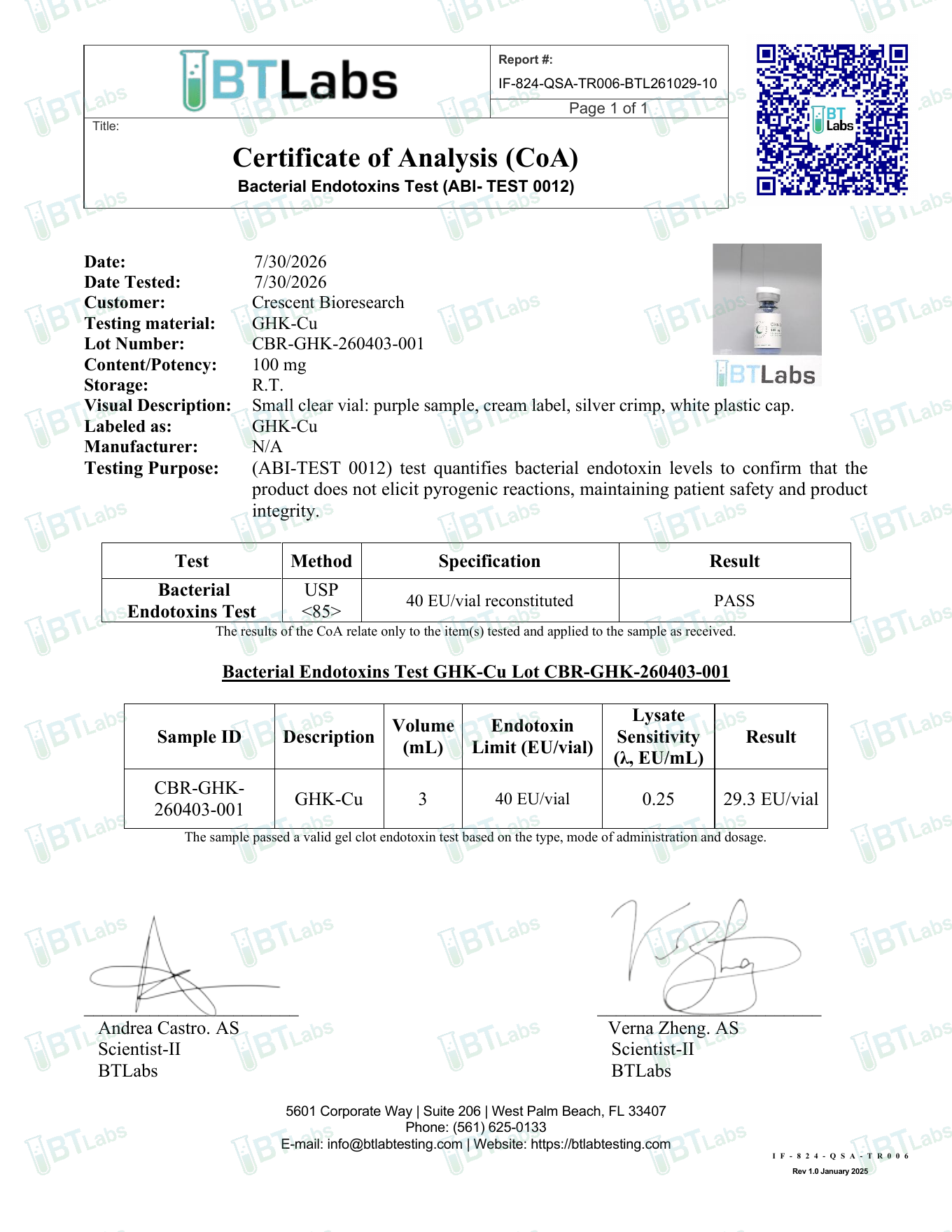
Bacterial endotoxin is measured by the gel-clot Limulus amebocyte lysate test following USP <85>, on a separate certificate, and reported as a number in EU per vial beside the sensitivity of the lysate that found it. That page is read line by line in the next section.
How much of it is there?
Purity is measured by high-performance liquid chromatography following USP <621> and reported as a percentage of the chromatogram: 99.7% against a specification of at least 98%. Content and potency are reported by the same method against the labelled amount: 101.8 mg of a labelled 100 mg.
Certificate for GHK-Cu lot CBR-GHK-260403-001, BTLabs, July 2026. No mass spectrometry is used or claimed.
Endotoxin
The gap that separates us
Published, not only passed.
Across the laboratory compound sector, endotoxin testing is common. Publishing the result as a number is rare. A specification turns a measurement into a single word and the measurement is left off the page. The limit differs by compound and by specification. Against a limit of 40 EU per vial, the figure on the certificate read below, a lot at 2 EU and a lot at 39 EU both pass; one carries nearly twenty times the endotoxin of the other.
What most certificates show
Pass
What a Crescent certificate shows
Pass · 29.3 EU/vial
Limit 40 EU/vial · lysate sensitivity 0.25 EU/mL · 3 mL
Identifying the different parts of a certificate
The certificate is the foundation of a successful study. When a research entity is guaranteed that the material they are working with is as such, the data produced within their studies hold true.
Identity
Identity by FTIR
USP <197A>. The sample spectrum is compared with the compound's characteristic bands. This row answers the first question a research entity asks of any vial: what is it?
Purity
Purity by HPLC
USP <621>. The share of the chromatogram that belongs to the target compound: 99.7% against a specification of at least 98%. It is a statement about the peaks, not about the weight in the vial.
Content and potency
Content by HPLC
The same method, read against the labelled amount: 101.8 mg of a labelled 100 mg, 101.8%. This is the row that says how much material the vial actually holds.
The verdict
PASS
The endotoxin certificate opens the way most certificates in the sector end: with a word. PASS against 40 EU per vial reconstituted. It is true, and it says only that the lot came in under the limit. It does not say where.
The limit
40 EU per vial
The threshold this lot's verdict was judged against, printed on the page. The limit is set per compound and per specification, so it differs from certificate to certificate. For a laboratory compound this number belongs to the research entity and its own model; publishing it lets that entity decide whether the limit is the right one for its work.
The sensitivity
0.25 EU/mL
The labelled sensitivity of the lysate. A gel-clot test detects endotoxin only at or above this concentration, so the result is only as fine as this cell. It describes the reagent, not the sample, and it is the cell most often missing even when a value is given.
The result
29.3 EU per vial
The numerical endotoxin value, in 3 mL of reconstituted sample. It is the number a laboratory needs when comparing lots, converting to its own working concentration, or explaining a result that did not replicate. Most certificates never print it.
Certificate for GHK-Cu lot CBR-GHK-260403-001, BTLabs, July 2026. Open the annotated original (PDF).
Traceability
A lot's journey, from synthesis to a published certificate

Documentation
A safety data sheet for every compound
Under the OSHA Hazard Communication Standard, a chemical supplier must provide a safety data sheet that names the supplier, classifies the hazards and records the known science of the substance. Crescent maintains a safety data sheet for every compound it lists, including those it holds for documentation only, and publishes them in a single library beside the certificates.
Handling
Storage where the stability profile requires it
Lyophilised compounds are comparatively stable because the water that degradation requires has been removed. Where a compound's stability profile calls for refrigerated transit, it ships that way. Where it does not, it ships at ambient temperature with the storage condition stated on the certificate, as the laboratory recorded it. The claim is never larger than the chemistry.

Public library
Look up a lot
Every vial carries a lot number. The same number opens its record in the public certificate library. This lookup holds the records published as of 4 October 2026.
To the research entities
Knowing what is in the vial is the first step towards scientific excellence.
Published literature shapes the present and future of scientific understanding. Readers take it as answer rather than as data. The validity of that work rests on the material it was done with, and the material deserves a strict standard. We set out to publish something that could be examined, not to make a statement that could not.